In non-destructive testing, the precision of equipment directly leads to the reliability of data. In this post, we share the results of a comparative analysis of how accurately third-party equipment and the DEEPSOUND system capture defect shapes using a test block containing defects of various sizes.
Test Sample Overview
Measurements were performed using a test block with holes of various sizes.
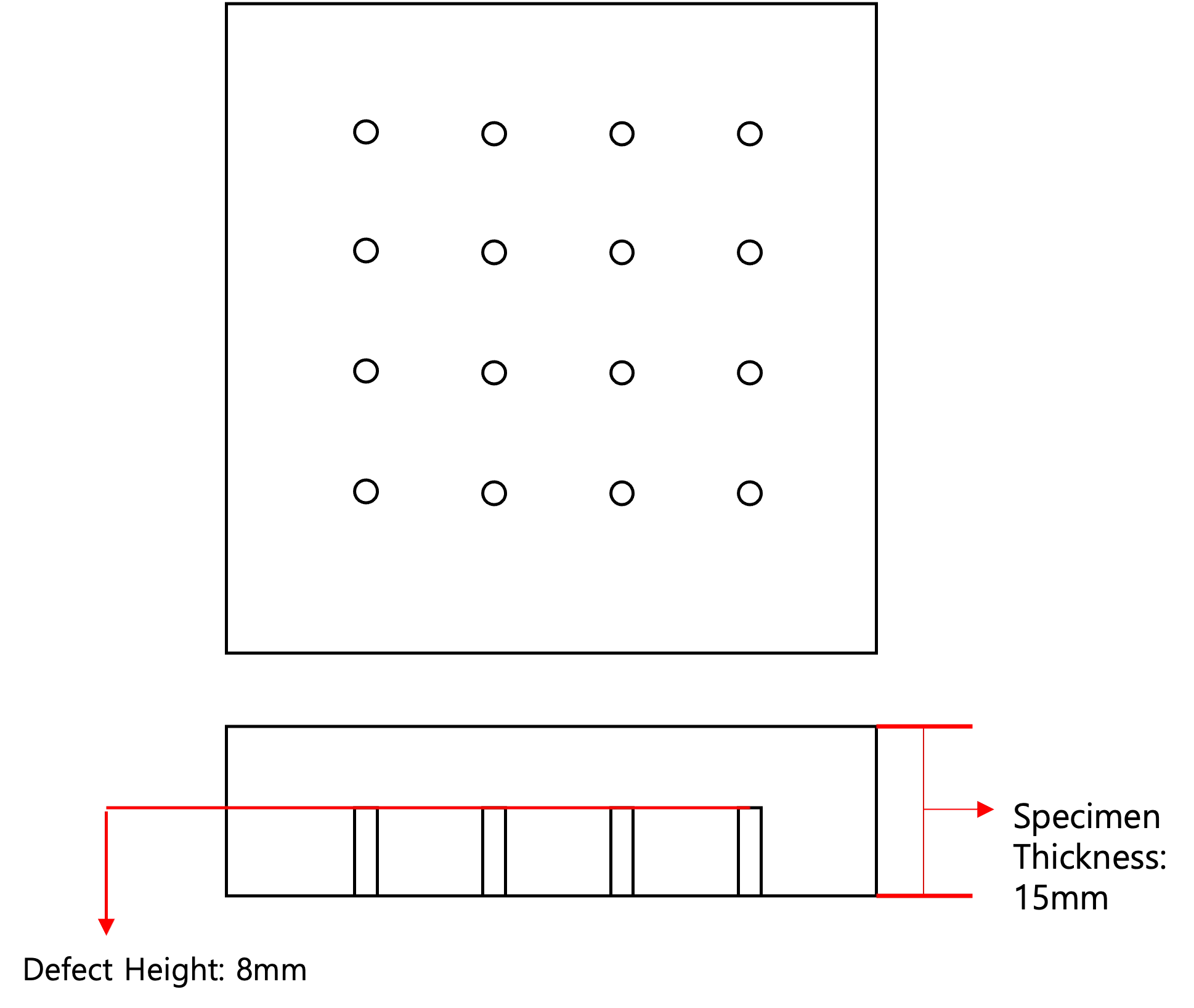
Probe & Wedge Specifications
For an accurate comparison, probes and wedges under the same conditions were used.
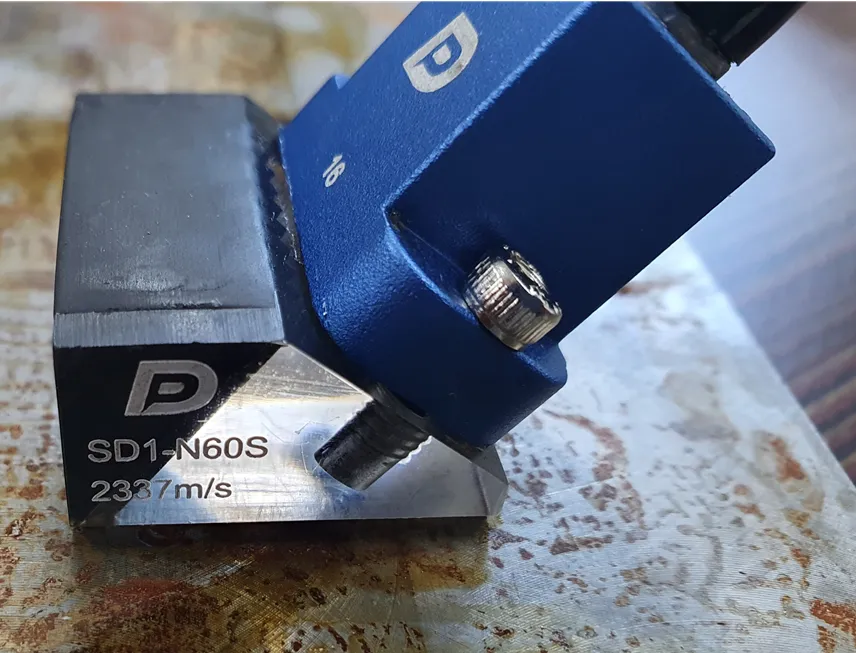
- Probe Specification: 10 MHz / 16 El / 0.6 mm Pitch
- Wedge Specification: 38-degree angle / 2337 m/s velocity / 15 mm height
- Note: Optimized the first element offset according to each manufacturer’s unique standards.
Sectorial Scan Comparison
Visual comparison of S-scan defect measurement images generated by third-party equipment and DEEPSOUND equipment.
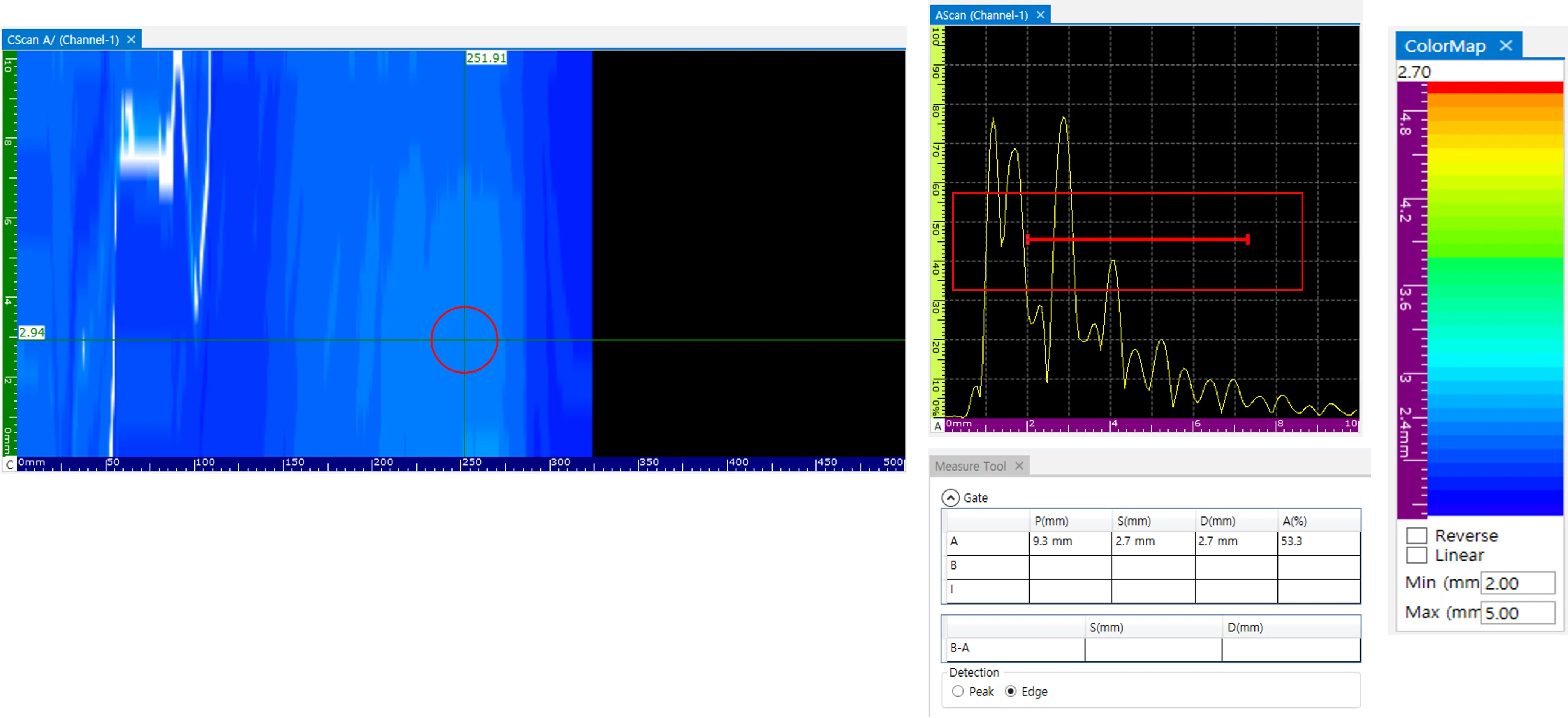
- Sectorial Scan Parameter Settings
- S-scan Image Comparison (Top: DEEPSOUND / Bottom: Third-party)
Precision Analysis Results
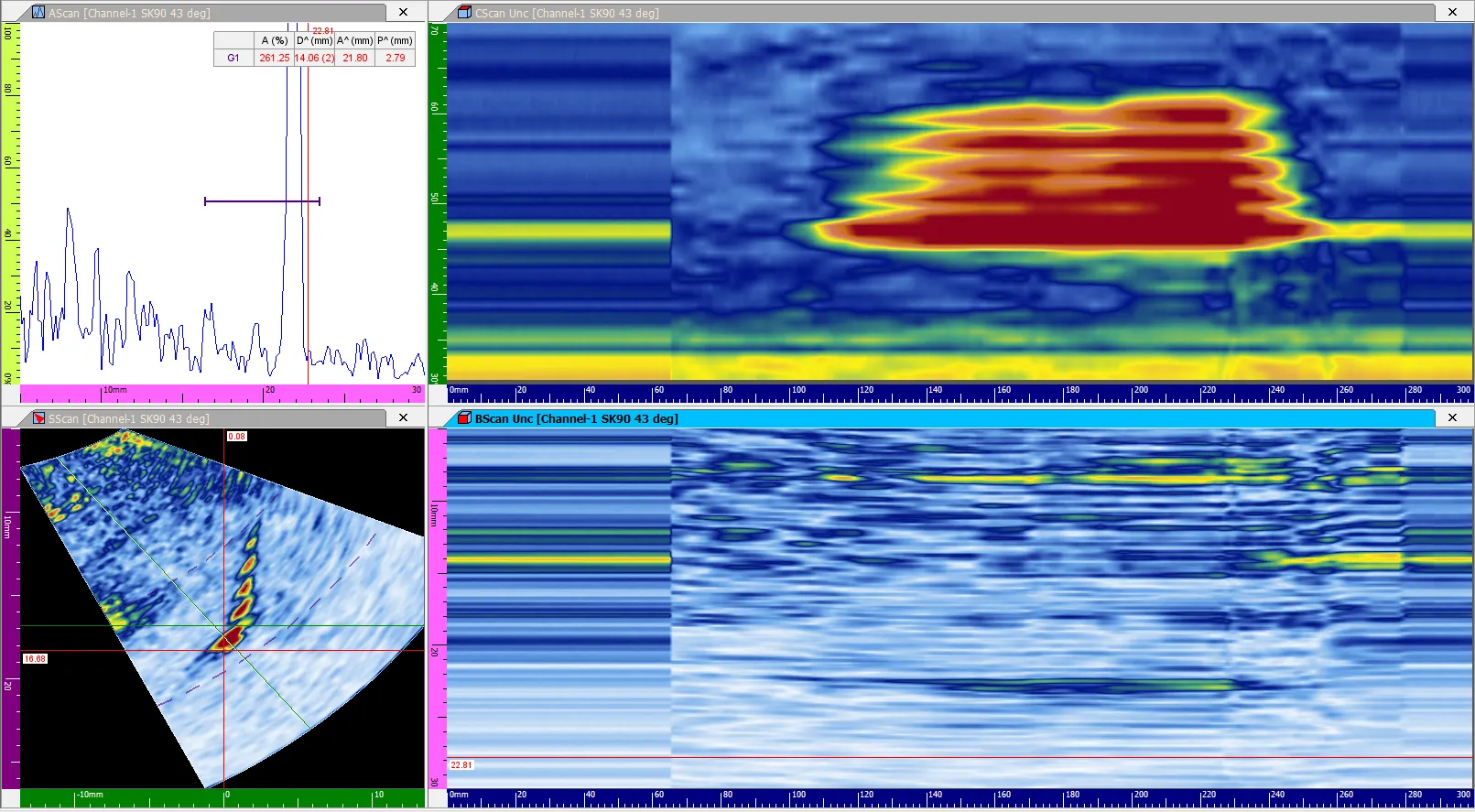
- DEEPSOUND S-scan Data
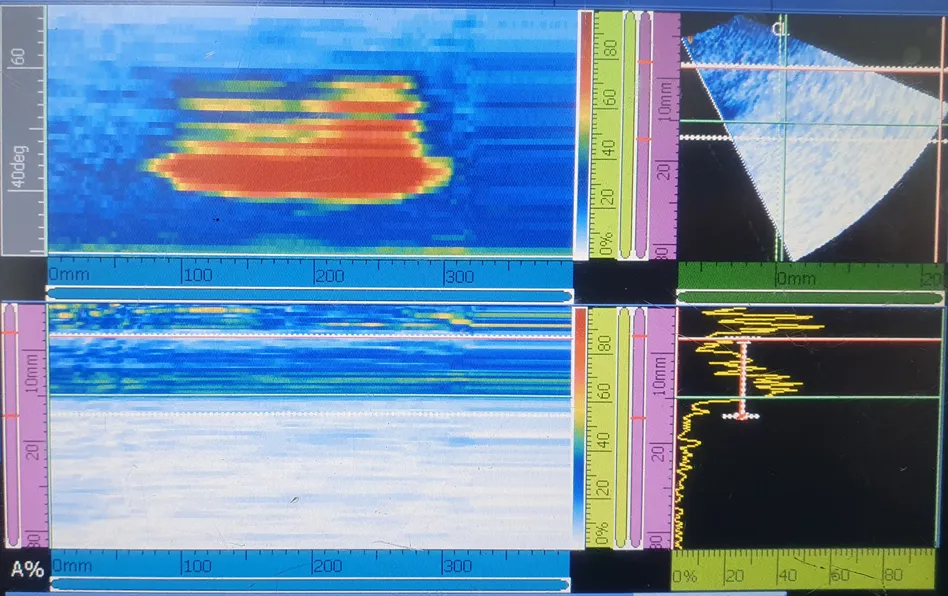
- Third-party S-scan Data
Linear Scan Comparison
Linear scans were performed in parallel to more clearly visualize the cross-section of the sample.
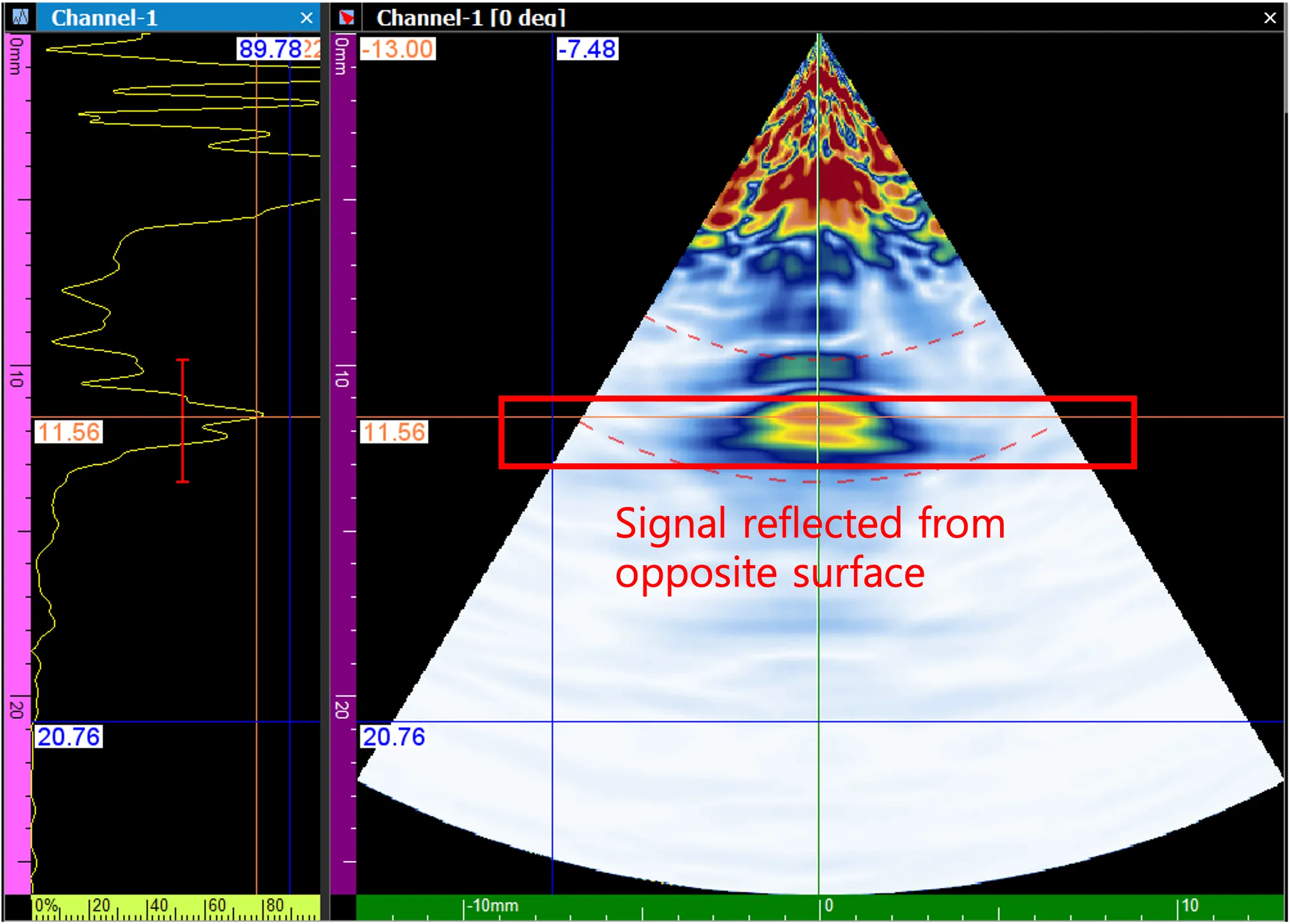
- Linear Scan Parameter Settings
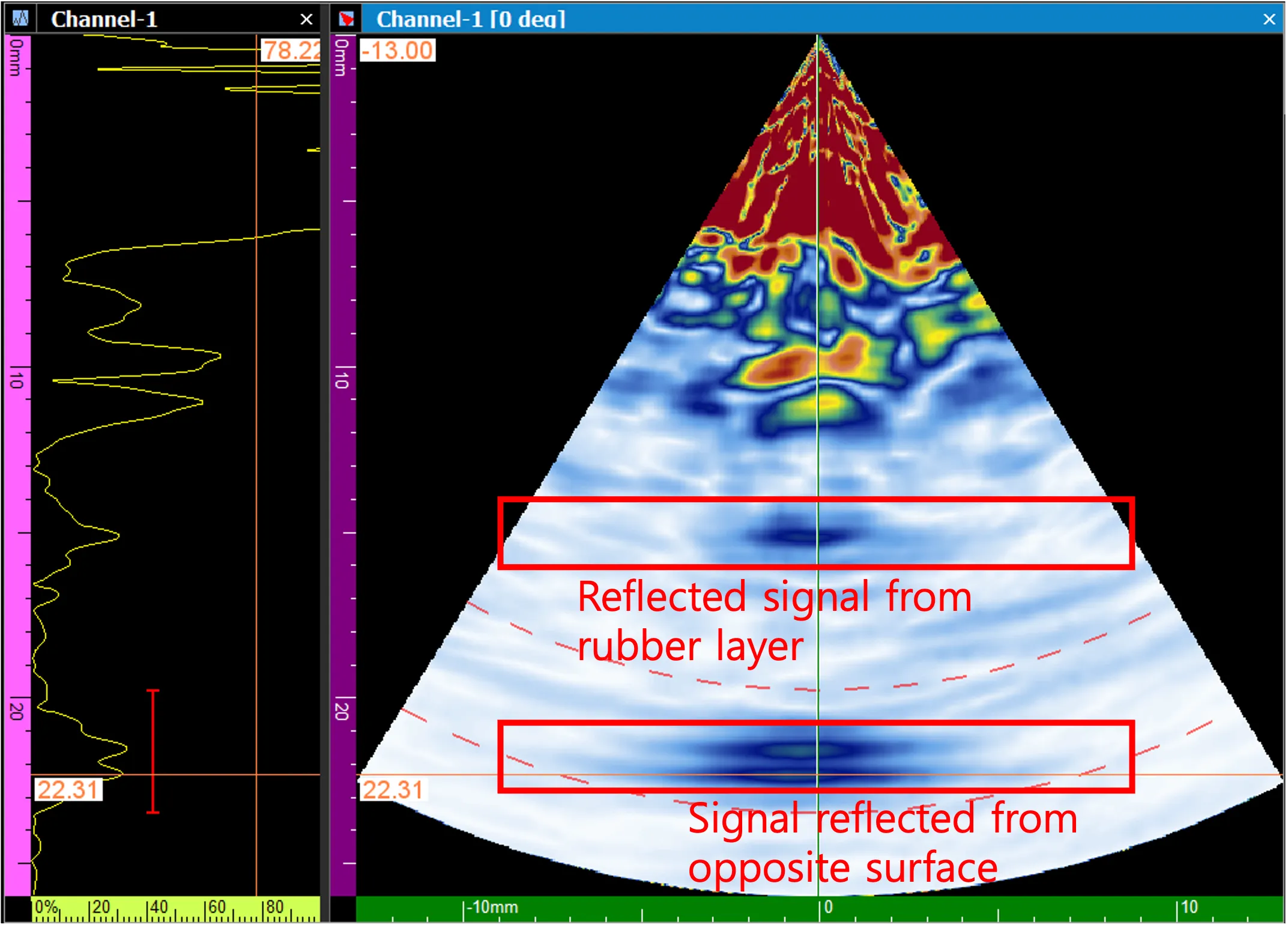
- Linear Scan Image Comparison
Precision Analysis Results
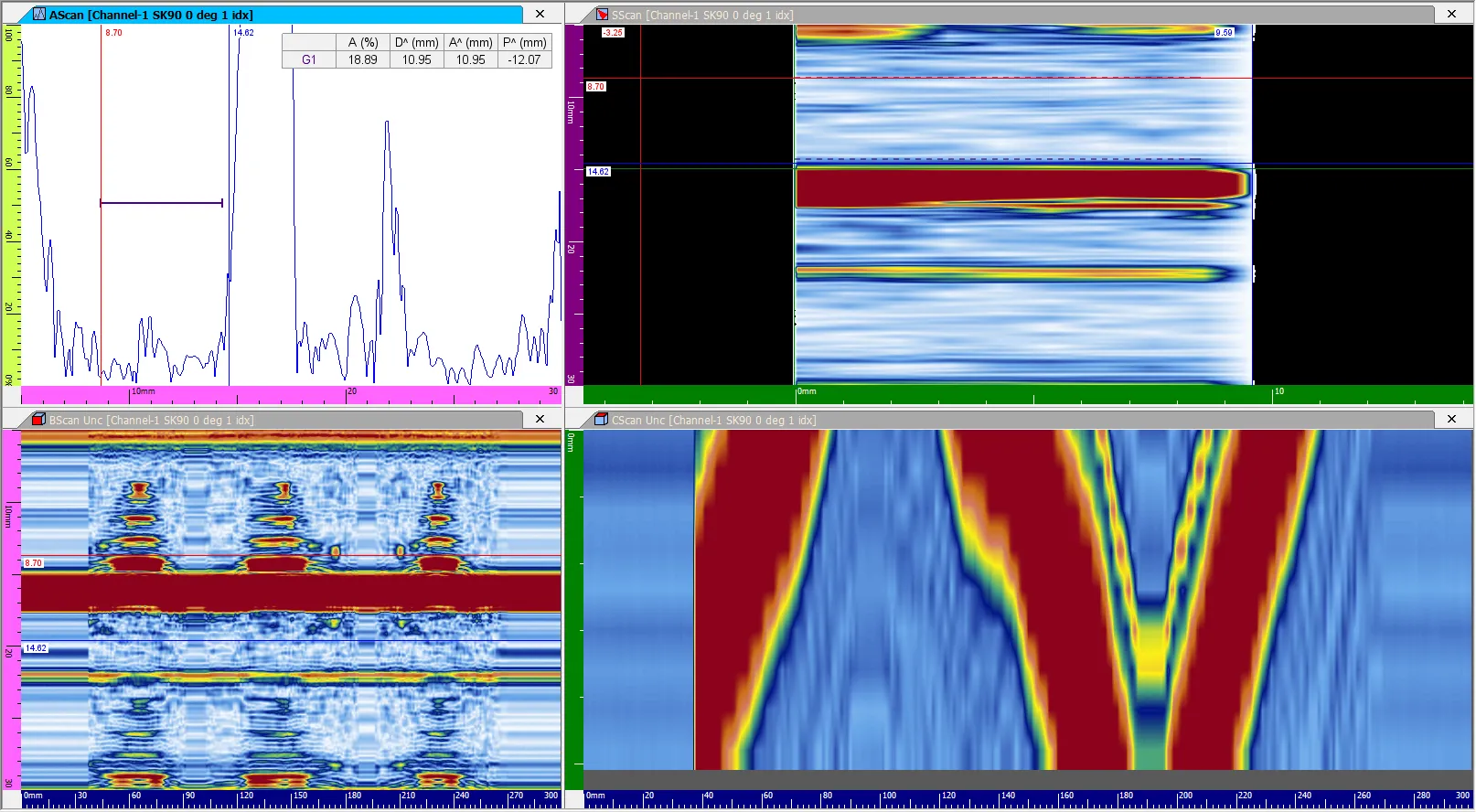
- DEEPSOUND Linear Data
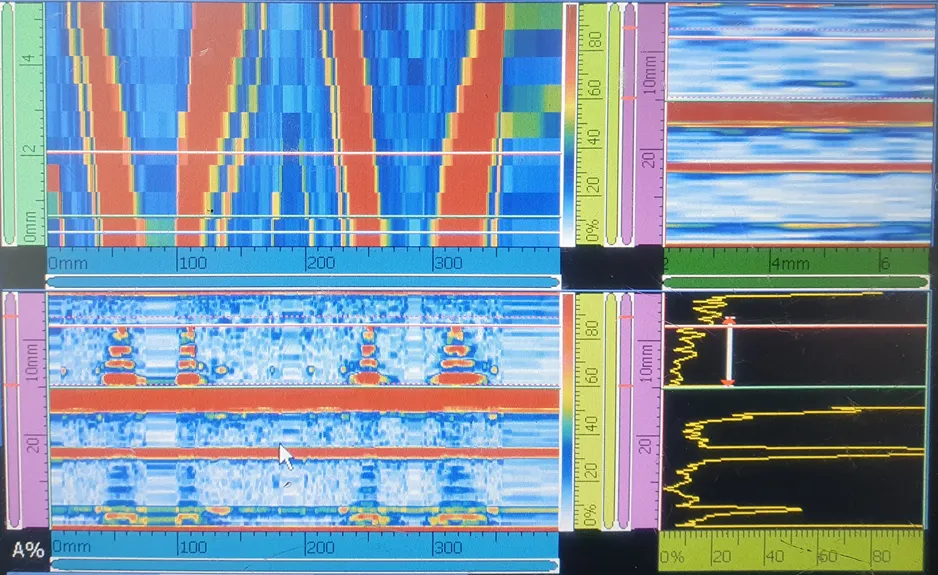
- Third-party Linear Data
Conclusion
- Data Consistency: Both DEEPSOUND and third-party equipment produced very similar and consistent defect images under the same settings.
- Shape Identification: S-scan images showed a characteristic of primarily highlighting the top edge of the defect.
- Efficiency: Linear scan images proved more effective for clearly visualizing the widest cross-section of the sample.
The DEEPSOUND system provides data quality equivalent to or exceeding global standard equipment and, in particular, speeds up field analysis through an intuitive interface.